

Introduction
If you spend time on Instagram, TikTok, Pinterest, or fashion-focused social media, you have probably seen OOTD in captions, hashtags, comments, and videos. But what is the OOTD meaning, and why do people still use this abbreviation in 2026?
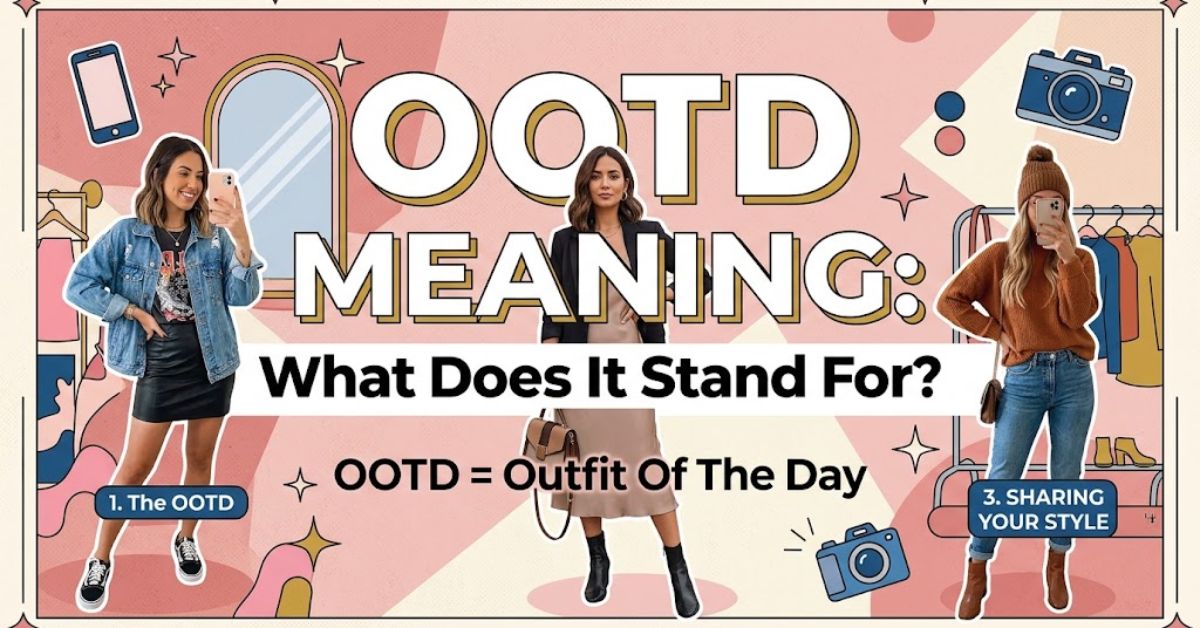
OOTD stands for “Outfit of the Day.” It describes the clothes, shoes, accessories, and overall look someone is wearing on a particular day. You might see it in a mirror selfie, fashion post, daily vlog, or short-form video showing a complete outfit.
In this guide, you’ll learn what OOTD means, where the abbreviation came from, how people use it in texts and social media, and what makes an OOTD post different from an ordinary outfit photo. You’ll also see practical examples, related slang, and answers to common questions about OOTD.
What Does OOTD Mean?
The most common OOTD meaning is “Outfit of the Day.” It is a casual abbreviation used when someone shares or talks about the outfit they are wearing that day. The phrase can refer to the complete look, including clothing, footwear, jewelry, handbags, makeup, hairstyles, or other accessories.
For example, someone might post a photo wearing jeans, a fitted jacket, sneakers, and a baseball cap with the caption “OOTD.” The message is simple: this is my outfit for today. You may also see phrases such as “today’s OOTD,” “my OOTD,” or “OOTD inspo,” where “inspo” means inspiration.
OOTD is especially common in fashion and lifestyle content. However, you don’t need to be a fashion influencer to use it. Anyone can share an everyday outfit, work look, college outfit, date-night style, or seasonal clothing combination as an OOTD.
What Does OOTD Stand for in Texting and Social Media?
In texting and online conversations, OOTD usually has the same meaning: Outfit of the Day. Unlike some slang terms that change meaning depending on the platform, OOTD is relatively straightforward. When someone says, “Here’s my OOTD,” they are normally referring to what they are wearing.
On social media, OOTD can work as a caption, hashtag, or content label. A creator might write “Casual OOTD” under a photo or use #OOTD on an Instagram or TikTok post. The abbreviation quickly tells viewers that the content focuses on an outfit or personal style.
The term also fits naturally into fashion discovery. Someone searching for outfit ideas may encounter posts featuring streetwear, business casual clothing, athleisure, vintage fashion, seasonal outfits, or formalwear. As a result, OOTD became more than simple texting shorthand. It developed into a recognizable label for outfit-focused content.
How Do People Use OOTD?
People use OOTD in several ways depending on the type of content they are sharing. The most common use is a photo or video showing a complete outfit. A person may photograph their clothes before going to work, school, dinner, a concert, a party, or another event.
OOTD can also describe a style breakdown. For instance, a creator might show a shirt, pants, shoes, bag, and accessories one by one before revealing the finished look. Fashion creators often use this format to explain where each item came from or how different pieces work together.
The abbreviation doesn’t require an expensive outfit. A simple combination of a hoodie, jeans, and sneakers can be an OOTD. Likewise, a carefully styled designer look can qualify. The key idea is that the outfit is being presented as the day’s look.
OOTD Examples in Real Conversations
Understanding the OOTD meaning becomes easier when you see how people actually use the term. In casual conversation, OOTD usually appears as a short caption or quick reference rather than a formal phrase.
Here are some natural examples:
- “What’s your OOTD today?” — What are you wearing today?
- “I love your OOTD!” — I like your outfit.
- “Posting my OOTD before I leave.” — Sharing today’s outfit.
- “This is my weekend OOTD.” — Showing a weekend outfit.
- “Need some OOTD inspo.” — Looking for outfit inspiration.
- “My fall OOTD is finally here.” — Sharing a fall-season outfit.
- “Rate my OOTD.” — Asking others for opinions about the outfit.
The tone is usually casual and social. You wouldn’t normally use OOTD in a formal business email or professional report. It belongs to the informal language of social media, texting, fashion communities, and everyday online conversation.
Why Is OOTD Still Popular in 2026?
OOTD remains useful because the idea behind it is simple and easy to understand. Fashion content has changed significantly over the years, but people still share what they wear. Platforms such as TikTok, Instagram, Pinterest, and YouTube continue to support visual content, making outfit-based posts easy to create and consume.
Another reason is flexibility. OOTD can describe many different fashion styles and situations. One creator might post a minimalist office outfit, while another shares a streetwear look or a vacation outfit. The abbreviation works across these categories without needing a long explanation.
There is also a social element. An OOTD post can invite comments, styling suggestions, product questions, compliments, and discussions about trends. In that sense, OOTD is not only about documenting clothing. It can also be a way to express personality and participate in fashion culture.
OOTD vs. Outfit of the Day: Is There a Difference?
There is no meaningful difference between OOTD and Outfit of the Day. OOTD is simply the shortened version of the full phrase. The abbreviation is faster to type and works well in captions, hashtags, comments, and short messages.
The main difference is tone. “Outfit of the Day” sounds more complete, while “OOTD” feels more casual and social-media friendly. For example, a fashion article might use “Outfit of the Day,” while an Instagram caption might simply say “OOTD ✨.”
You may also see related phrases such as WIWT, which means “What I Wore Today.” WIWT focuses on documenting what someone wore, while OOTD is commonly used as a label for a day’s outfit or fashion post. Both terms can overlap in everyday use.
OOTD vs. Other Fashion Slang
OOTD is part of a larger group of internet and fashion abbreviations. Understanding these terms can make social media captions easier to follow.
GRWM means “Get Ready With Me.” It usually describes a video showing someone getting dressed, doing their hair, applying makeup, or preparing for an event.
OOTN means “Outfit of the Night.” It is similar to OOTD but specifically focuses on an evening or nighttime outfit.
WIWT means “What I Wore Today.” It is commonly associated with sharing or documenting a daily outfit.
Fit check is another popular phrase. When someone says “fit check,” they are usually asking viewers to look at or react to their outfit. The word “fit” is being used as a shortened form of “outfit.”
These terms overlap, but they aren’t always interchangeable. Context tells you what the creator means.
How to Create a Good OOTD Post
You don’t need professional photography equipment to create an effective OOTD post. A clear photo, good lighting, and a visible full outfit are usually enough. Natural light can make clothing details easier to see, while a simple background keeps attention on the outfit.
A useful caption can also add context. You could mention the occasion, season, clothing style, or a specific item you want to highlight. For example, “Casual fall OOTD: oversized jacket, straight-leg jeans, and sneakers” gives viewers more information than simply writing “OOTD.”
If you’re creating fashion content regularly, consistency matters more than making every post look expensive. Try different outfit combinations, styling ideas, seasonal looks, and personal preferences. Authenticity often makes fashion content more relatable than simply copying every trend.
Is OOTD Only Used for Fashion Influencers?
No. Anyone can use OOTD. You don’t need a large social media following, expensive clothing, or professional fashion knowledge.
Students can share a campus OOTD. Someone heading to the office can post a work outfit. A traveler can show a vacation look, while a sneaker fan might highlight an outfit built around a favorite pair of shoes.
That broad use is part of what makes the abbreviation practical. OOTD describes an everyday activity rather than a specific type of person. Whether the outfit costs $30 or $3,000, it can still be an OOTD.
FAQs About OOTD Meaning
What does OOTD mean on Instagram?
OOTD on Instagram usually means “Outfit of the Day.” It is commonly used in captions and hashtags when someone shares their clothing, accessories, shoes, or complete daily look.
What does OOTD mean in texting?
In texting, OOTD normally means “Outfit of the Day.” Someone might ask, “What’s your OOTD?” to ask what you are wearing that day.
What does OOTD mean on TikTok?
On TikTok, OOTD refers to Outfit of the Day content. Creators may use it for outfit transitions, styling videos, fashion inspiration, or quick “fit check” clips.
What is the difference between OOTD and GRWM?
OOTD focuses on the outfit someone is wearing, while GRWM means “Get Ready With Me.” GRWM content usually shows the process of getting dressed or preparing for an event.
What does OOTN mean compared with OOTD?
OOTN means “Outfit of the Night.” It is similar to OOTD but usually refers to an evening outfit, such as clothing worn for dinner, a party, a concert, or a night out.
Conclusion
The OOTD meaning is simple: “Outfit of the Day.” It is a widely recognized abbreviation used to describe or share someone’s daily outfit, especially across social media and fashion communities.
Although internet slang changes quickly, OOTD remains useful because it is short, clear, and flexible. You can use it for casual clothes, office wear, streetwear, seasonal fashion, event outfits, or everyday looks. You may see it alongside terms such as GRWM, OOTN, WIWT, and fit check, but OOTD specifically centers on the day’s outfit.
So, if you see #OOTD in a post or someone asks about your OOTD, they’re simply talking about what you’re wearing today.
